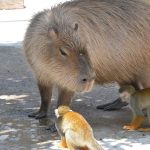
Capybara Chattering
One of the most common sounds capybaras make is a gentle chattering. This sound comes from their teeth. Capybara chattering often happens when they’re relaxed or grooming. It’s similar to the way guinea pigs purr, but slightly deeper. It’s a comforting noise that signals contentment.
Some people ask about the capybara’s tooth sound. That’s what this is: a rhythmic, repeated tooth grind that acts like a calming message to other capybaras around them.
What Does a Capybara Sound Like When It’s Excited?
When happy or seeking attention, capybaras squeak. A capybara squeak is short, quick, and high-pitched. These squeaks are often used by babies or young capybaras, but adults will also squeak softly when greeting someone or feeling playful.
So yes, do capybaras make noise? They absolutely do. They use sound to bond, signal comfort, or express emotion.
Capybara Barking
One sound people don’t expect is barking. Do capybaras bark? Yes. It’s usually a short, loud burst used as a warning. If they sense danger or feel startled, they let out a sharp capybara barking sound that alerts the group.
Capybara’s barking is not constant, but it can surprise you if you’re not used to it. Think of it like a dog’s bark, but quicker and more muffled. It’s an alarm system, not aggression.
Capybara Yawning and Other Vocal Clues
Yawning doesn’t make much noise, but capybara’s yawning is easy to spot. It often comes with a stretch and slow head movement. While not vocal, it can sometimes be paired with soft groans or breathy huffs, especially if they’re shifting from sleep to wakefulness.
What Noise Does a Capybara Make When Upset?
In rare cases, capybaras scream. A capybara’s scream is high pitched and usually only happens when they’re scared or in distress. It’s a sound you don’t often hear unless something’s really wrong.
More common are growls or sharp huffs when they feel uncomfortable. Again, most capybara pet noises are peaceful, but it’s helpful to know all the possible sounds.
Capybara Ears
While not making sound themselves, capybara ears are worth mentioning. They move constantly, scanning for sound. When you hear a capybara’s noise, their ears often twitch toward the source, showing how alert and reactive they are. It’s part of how they communicate non-verbally, paired with their vocal habits.
Conclusion on Capybara Sound
So, what sounds do capybaras make in daily life? They chirp, bark, squeak, chatter, and sometimes growl. Each sound gives a clue to how they feel. Whether you’re caring for one or just curious, understanding capybara noises can deepen your appreciation for these social, expressive animals.